
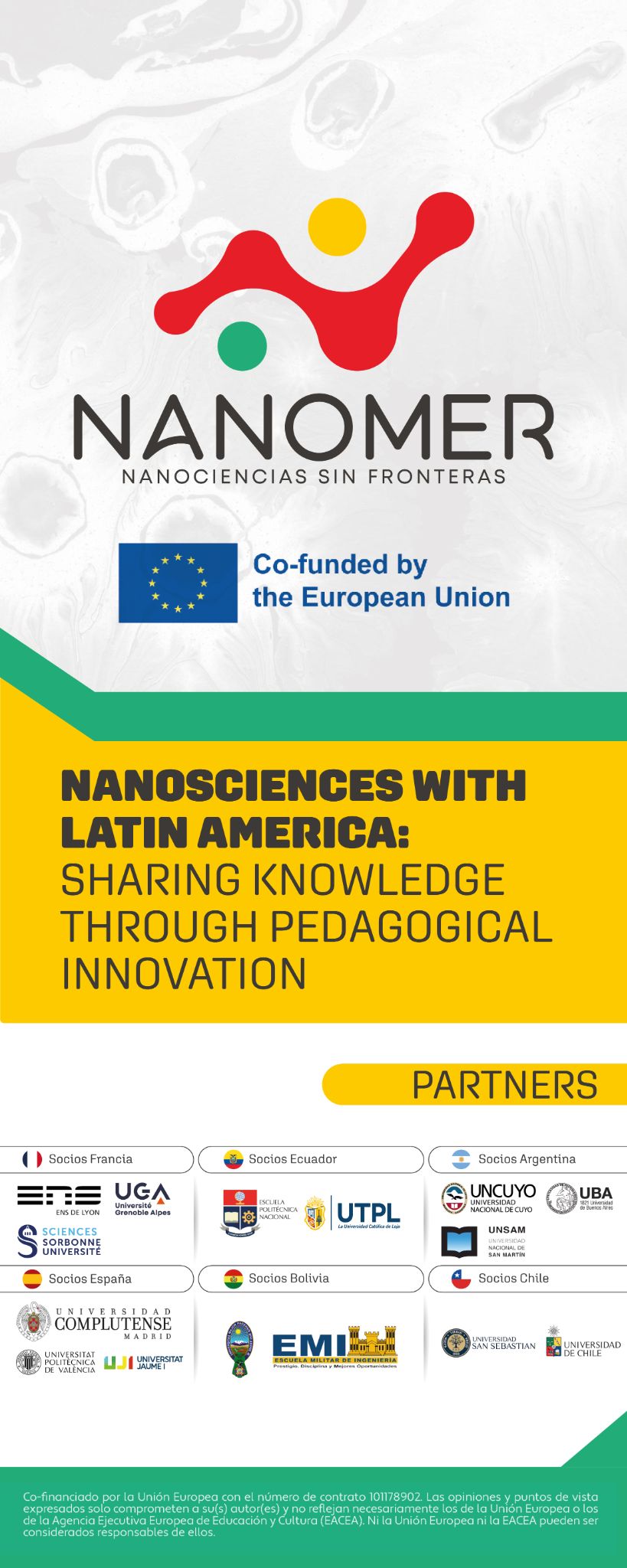
Nanomer is an international network composed of universities, research centers, and international cooperation offices from Europe
and Latin America, united by a commitment to strengthen teaching and research in nanoscience through innovative and collaborative approaches.

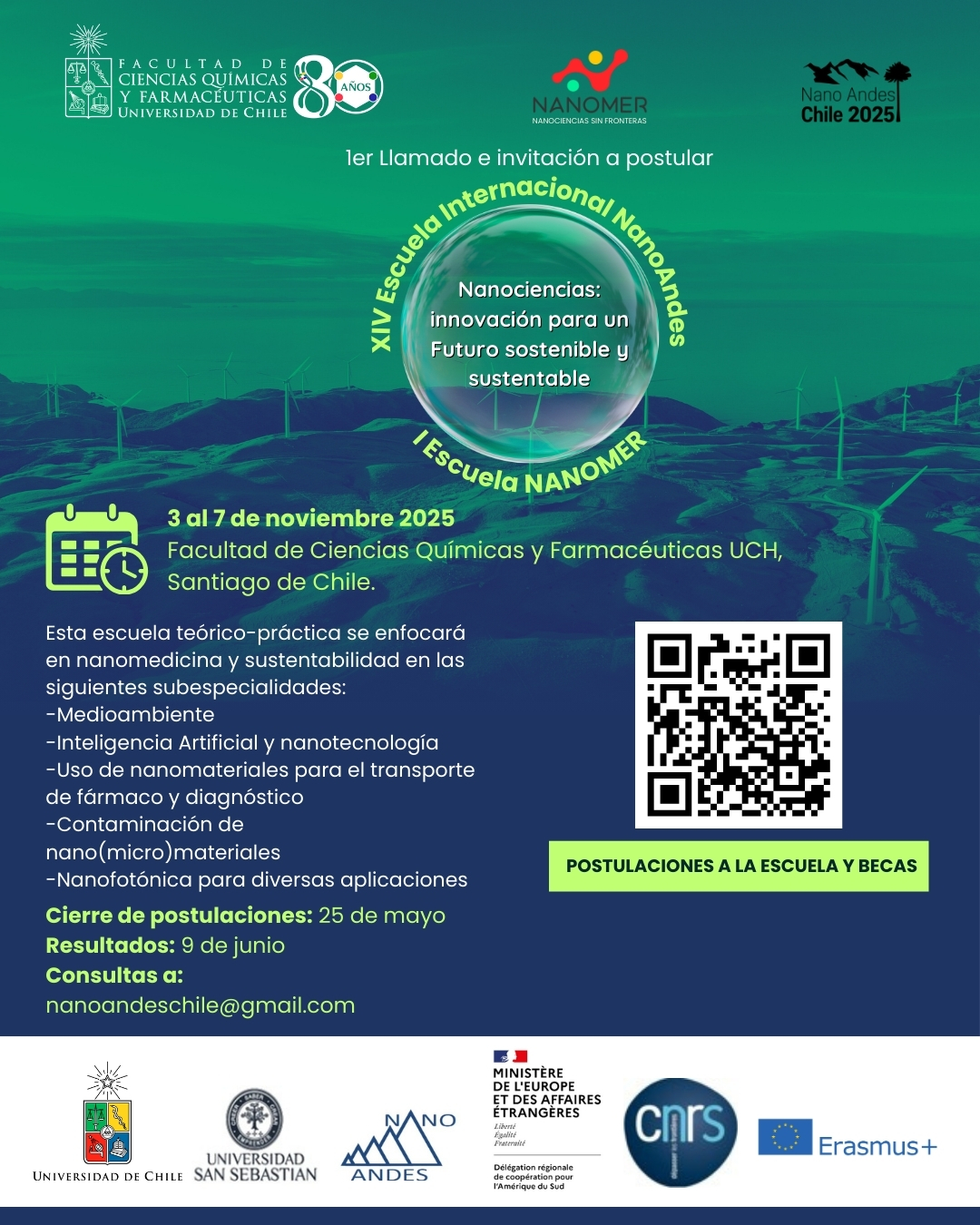
Red NanoAndes (NanoAndes Network)

Useful links:
Contact: nanoandeschile@gmail.com
LMSF has been part of and is actively involved in the NanoAndes Network since its inception. This Network emerged in 2010 as a joint initiative of researchers from Andean countries with the Puya de Raimondi (now Puya Internacional). The proposal for Cooperation in Nanosciences and Nanotechnology extended to Latin American countries, initially supported by the French Embassy in the Andean countries. This support continues through CNRS GDRi projects that promote the organization of workshops and thematic schools, lately focused on contributions of nanoscience and nanotechnology to health, environment, and energy.
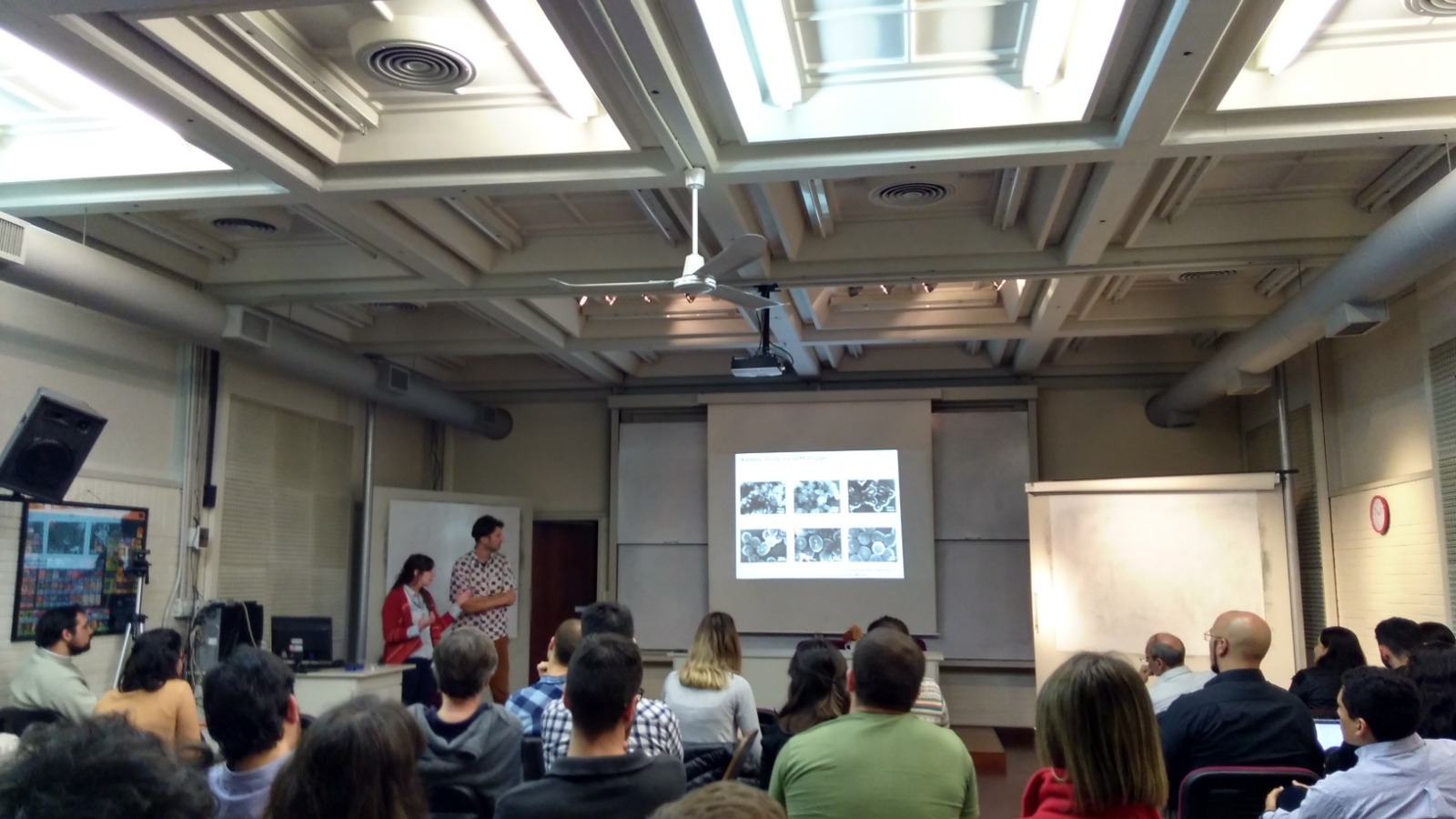
The NanoAndes Network organizes a workshop annually and a theoretical-practical nanosciences school, aimed at undergraduate and graduate students from Latin American universities. Over 600 students have attended these events, fostering academic collaboration, scientific visits, and collaborative projects among Network members. The school is renowned for its lectures and classes delivered by French and Latin American researchers, and its “hands-on” format, which allows students to explore topics through laboratory sessions.
Escuela de Síntesis de Materiales: Procesos Sol-Gel
(School of Material Synthesis: Sol-Gel Processes)

The Sol-Gel School was founded by Dr. Alberto Regazzoni, Dr. Galo Soler Illia, Dr. Roberto Candal, and Dr. Sara Aldabe Bilmes, who is a member of the LMSF. The School aims to train students in the synthesis of materials through the Sol-Gel chemistry method, uniquely combining basic and advanced knowledge with laboratory experience. It bridges the disciplines of chemistry, physics, and materials science, serving as a starting point for the synthesis of hybrid, nanostructured, and mesoporous materials, with potential applications as sensors, membranes, catalysts, encapsulation materials for controlled drug release, and countless other uses, limited only by imagination.
The School has been held biennially since 2003 and has contributed to the education of over 500 Ph.D. students, becoming a reference point for the creation of the materials chemistry and nanotechnology community over the past two decades. It has also served as an inspiration for other courses that have emerged in the Americas and Europe. All current LMSF researchers actively participate in the Sol-Gel School courses.